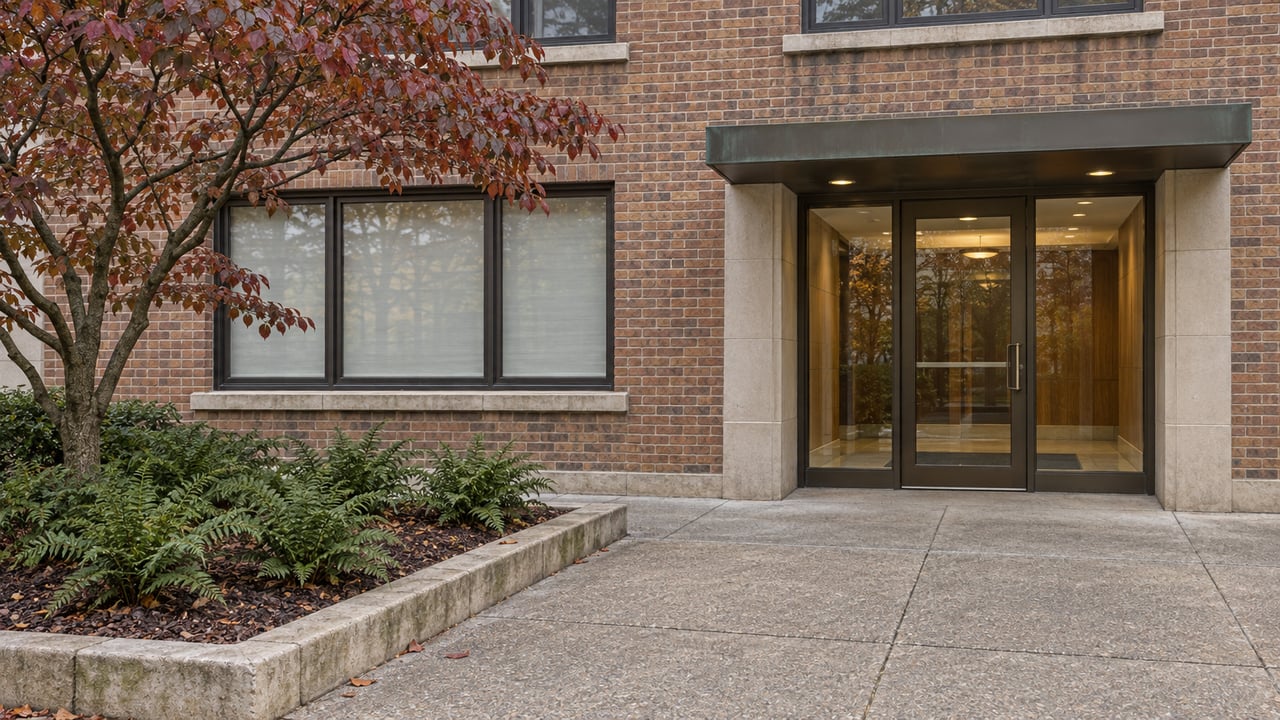
When you go under contract on a downtown Silver Spring condo this fall, a lot more of your lender's review now falls on the building. For loans sold to Fannie Mae, the company retired its Limited Review process for condo projects, and lenders must apply that change to every loan application dated on or after August 3, 2026. Buildings that used to get the lighter review now go through a Full Review, or through a waiver where the rules allow one. Silver Spring adds a local twist. Almost every large residential building planned downtown is described as apartments. A condo buyer here is mostly choosing from buildings that already exist, and the new rules make each building's finances a bigger part of the decision.
The review that changed on August 3
Lender Letter LL-2026-03 did more than end Limited Review. When a lender uses a reserve study to show a building's savings are adequate, the lender now has to confirm that the budget includes the highest reserve allocation the study recommends. The letter puts the change bluntly:
"Lenders are no longer permitted to use the baseline funding method which is the option that allows the reserve cash balance to approach but never fall below zero."
On January 4, 2027, the minimum share of a building's annual assessment income set aside for replacement reserves rises from 10% to 15% for Full Review loans. Fannie Mae also says critical repairs, inadequate insurance, significant litigation, or hotel-style and short-term-rental features can make a project ineligible. Its online Condo Project Status Finder has a catch. A "no findings" result does not mean the project has been reviewed or approved. FHA approval works through a separate system, and HUD keeps a searchable list of FHA-approved condo projects by name and location.
So the building has to qualify before the loan on your unit does. In a market full of older buildings, that check matters more.
Why nearly every condo for sale is in an older building
A Summer 2025 report by a Montgomery County Council Central Staff fellow counted the moderately priced for-sale units built in the county over the prior five years. Of 389, none were in high-rise condos. 383 were townhomes and six were single-family homes. The report found that since 1990, 12 multifamily condo developments in the county, plus two more in the pipeline, negotiated alternative agreements instead of building those affordable units, and developers "uniformly cited high condominium fees" as the reason. A developer interviewed for the report said market conditions and the legal risks of condo development make high-rise rentals more attractive. The report singles out the unknown cost of construction-defect litigation.
Downtown Silver Spring's pipeline matches that pattern:
- Former Tastee Diner site, 8676 Georgia Avenue. Roadside Development won Planning Board site plan approval in June 2025 for a 312-foot building with 493 apartments, and the developer targeted a mid-2026 construction start, Bethesda Magazine reported. The historic diner car, a county landmark since 1994, is set to be restored and moved about 45 feet west into the new building's ground floor, according to UrbanTurf's October roundup of the downtown pipeline.
- Ellsworth Place, Colesville Road and Fenton Street. GBT Realty proposed a tower of up to 450 units above the mall, and the sketch plan was approved 4-0 in May 2024, UrbanTurf reported. Since October 2025, the mall's $69 million loan has been in special servicing, according to Bisnow.
- Woodside Place, 1545 North Falkland Lane. True Ground Housing Partners has filed plans for up to 1,340 homes in four multifamily buildings plus 50 townhomes, according to the same UrbanTurf roundup. The project is still in the proposal stage.
- Bracken Square, 715 Sligo Avenue. This 98-unit affordable rental building opened in December 2025, Bethesda Magazine reported.
None of these is a new for-sale condo building. If you want to own an apartment-style home near the Metro, the Silver Spring condo market is mostly the existing stock.
Maryland's reserve law decides when the bill comes due
The council report also says statewide reserve requirements are a factor that can push fees up in aging buildings. The law behind that is House Bill 292, effective October 1, 2025. It requires a residential condominium's annual reserve budget to match the funding amount recommended in its most recent reserve study, deposited by the end of each fiscal year. If that study was the building's first, the board has five fiscal years to reach the recommended level, following a funding plan. The law includes one release valve. By a two-thirds vote, a board can declare a financial hardship that lets the building fund reserves below the requirement for one fiscal year at a time, renewable by another two-thirds vote. Owners must get advance notice of that vote, and the board must document its good-faith efforts to get back on schedule. Those records are open to owners.
Maryland sets a schedule for buildings to catch up on reserves. Fannie Mae now checks budgets against the highest recommended allocation instead of a bare-minimum funding path. A building that is still catching up, or that has voted a hardship deviation, shows that gap in its budget, and it can show up in your monthly fee for years after you buy.
What the fall numbers mean for a buyer
There is no published Silver Spring-only condo data series. The closest figures are metro-wide and county-wide, and they all point the same way.
In Bright MLS's September 2026 report for the Washington metro, condo closings fell 16.3% from a year earlier to 851. Active condo listings rose 30.3% to 4,891, and supply reached 4.92 months. The median condo took 35 days to sell in September 2026, compared with 18 days for detached homes. The metro condo median still rose 1.6% to $385,000, while the detached median rose 2.6% to $785,000. Bright attributes most of the overall September price gain to a larger share of higher-priced single-family sales and fewer condo and townhome sales.
The Greater Capital Area Association of Realtors tracks condos and co-ops across its service area. Its August 2026 report shows 55 average days on market, 43% above the five-year August average, and a contract ratio of 0.17, down from 0.27 a year earlier. In September 2026, the condo and co-op median was $399,495, with 54 average days on market and 2,590 active listings.
Buyers have more time and more choices than they did a year ago, and that gives them room to negotiate price. Some of that slowdown may also come from building reviews, which a lower price cannot fix. A seller can drop the price of a unit, but a single seller cannot change the building's reserve plan.
The dates on one calendar
This post publishes October 22, 2026. Here is where each rule stands on that date.
| Date | Rule | Status on October 22, 2026 |
|---|---|---|
| October 1, 2025 | Maryland HB 292 ties condo reserve budgets to the reserve study | In effect |
| August 3, 2026 | Fannie Mae ends Limited Review and requires the highest recommended reserve allocation | In effect |
| January 4, 2027 | Fannie Mae minimum reserve allocation rises from 10% to 15% | About 10 weeks away |
| October 1, 2027 | Maryland SB 747 unit-owner insurance requirements | About a year away |
The last row affects owners directly. Senate Bill 747 requires condo unit owners to carry insurance that covers the association's deductible and contents, 12 months of loss of use, at least $500,000 of personal liability, and at least $25,000 of loss assessment coverage. When damage starts in a unit, that owner is responsible for the lowest of three amounts: the repair cost, the association's property-insurance deductible, or $25,000. If you buy this winter, you will own your unit when this rule takes effect.
What the building's documents show
Each of these documents answers a question that the listing price does not:
- The current budget. It shows whether reserve contributions match the reserve study's recommended amount or are still catching up under Maryland's five-year schedule.
- The reserve study and funding plan. These show the board's plan for future capital costs and when each payment is due.
- The master insurance policy and its deductible. Under SB 747, this deductible becomes part of what a unit owner may owe.
- Board minutes. These are where repair projects, litigation, and possible assessments usually appear first.
- Your lender's project review result. This answers whether your loan works in this building at all.
This post is general information and not legal, tax, or financial advice. Please confirm how these rules apply to your purchase with your lender, insurance agent, or attorney.
A few questions buyers ask
Does a slow condo market mean Silver Spring condos are a bargain right now? Buyers have more leverage on price this fall, based on the metro and GCAAR figures above. A lower price helps only if the building's fees and reserve plan still work for your budget.
Will the new downtown towers add condo supply? The Tastee Diner, Ellsworth Place, and Bracken Square projects are described as apartments. Woodside Place has filed plans, but the project is still in the proposal stage.
Is FHA approval the same as Fannie Mae eligibility? No. They are separate reviews. HUD publishes the FHA list, and Fannie Mae's Status Finder does not confirm approval when it shows "no findings."
The Velvel Group can go through a building's documents with you alongside the unit itself, so the price you negotiate reflects both. Explore more on Silver Spring or read our buyer's guide, then schedule a consultation.