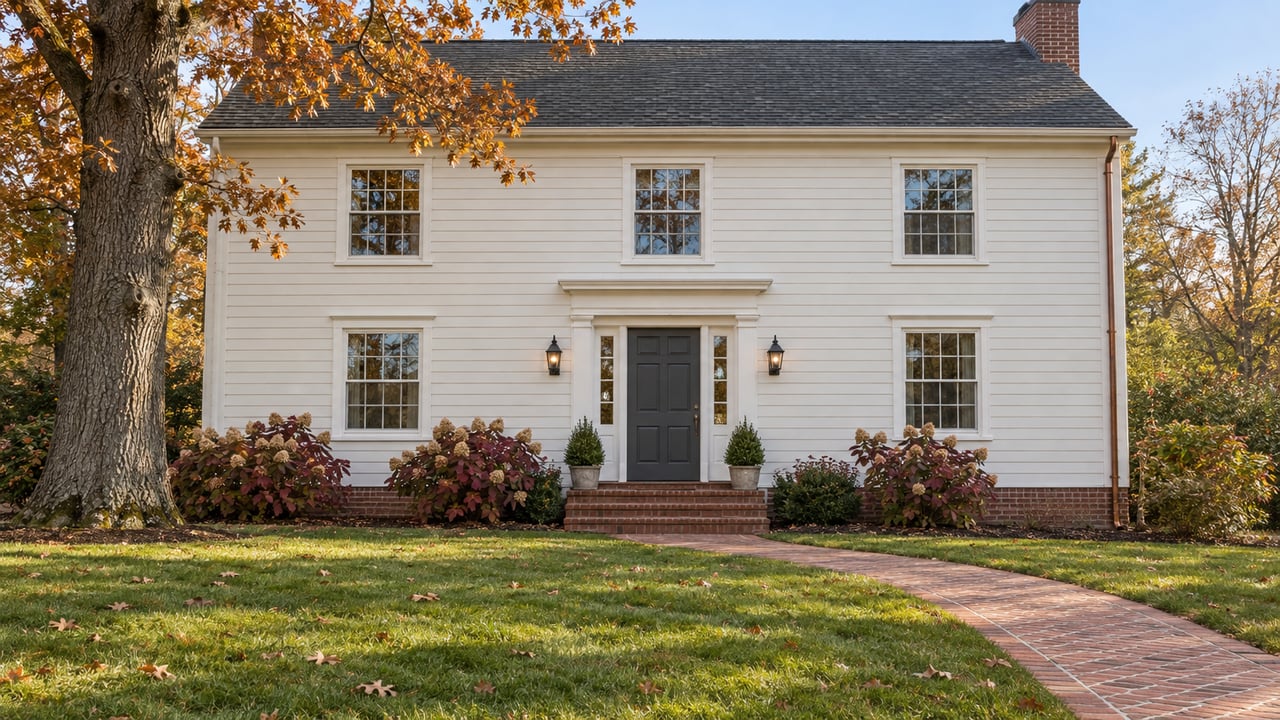
Two single-family listings say "Rockville, MD 20850" and are priced within a few thousand dollars of each other. Will they cost the same to own? Often they won't, and the address alone can't tell you. Many homes with a Rockville mailing address sit outside the incorporated City of Rockville and fall under Montgomery County alone. A home inside the city line pays an extra property tax rate, sends a different trash bill and may get its water from a different utility. Starting in January, a rental there will also follow a different landlord code.
The ZIP code doesn't decide any of that. The city limit does, and the city limit doesn't follow the post office's map.
The line that adds $0.292 to every $100
Every property in Montgomery County pays the General County real property tax, which is $0.6706 per $100 of assessed value for the levy year running July 1, 2026, through June 30, 2027. The Montgomery County Department of Finance applies that rate across the county, so a city resident's county rate is not reduced.
Inside the City of Rockville, a second rate sits on top. The city's adopted FY2027 budget totals $186.8 million and keeps the city's real property tax rate at $0.292 per $100 of assessed value.
Take a home assessed at $600,000. At $0.292 per $100, the city portion comes to $1,752 a year. That's $146 a month added to the carrying cost, and a payment calculator using only a list price and a generic county rate won't show it. Two homes with matching prices and matching assessments can still differ by that much every year, depending on which side of the boundary they sit on.
A full bill depends on the parcel's assessment and any special-area levies that apply, so the $1,752 figure illustrates the city rate and is not a total bill.
The trash bill nearly evens out, so the tax rate does most of the work
The trash bill doesn't follow the tax bill. Inside the city, Rockville collects refuse, recycling and yard waste weekly from single-family homes and most townhouses, and the charge appears on the county property tax bill. The city set that charge at $585 per single-family residence for FY2027, a $20 increase from $565 the year before. The county adds its $89.99 base systems benefit charge, which every property owner pays. The county's page for homes in municipalities lists the county disposal fee, incremental systems benefit charge, refuse collection charge and leaf vacuuming charge as zero for those homes.
Outside the city, the county charges more line items. The FY2027 solid waste resolution, adopted May 13, 2026, lists these:
| Annual charge, single-family home, FY2027 | Inside City of Rockville | Unincorporated county |
|---|---|---|
| County base systems benefit charge | $89.99 | $89.99 |
| County incremental systems benefit charge | $0 | $257.14 |
| County disposal fee | $0 | $61.43 |
| County refuse collection charge | $0 | $160 in Subdistrict A only |
| County leaf vacuuming charge | $0 | $123.67 in the leaf vacuuming area only |
| City of Rockville refuse charge | $585 | $0 |
| Typical total | $674.99 | $408.56 to $692.23 |
In Subdistrict A, county contractors pick up trash and recycling weekly. In Subdistrict B, residents hire a county-authorized independent collector for trash, and that hauler bills them separately. An unincorporated home in Subdistrict A with leaf vacuuming pays $692.23 on its tax bill, slightly more than the $674.99 an in-city home pays. A Subdistrict B home pays $408.56 on the tax bill and then pays a private hauler on top of that.
So trash costs come out roughly even across the line. The bigger difference is the $0.292 city rate, and it grows with the assessment. Comparing listings by their trash charges misses most of the gap. Comparing them by assessed value times the city rate captures most of it.
Inside the city, water depends on a different map
Being inside the city line doesn't settle who supplies your water. The City of Rockville's water and sewer billing page says the city serves about 70% of the city, roughly 13,000 accounts, and WSSC Water serves the rest of Rockville's residents and businesses.
The two utilities price water differently. For FY2027, Rockville charges a single-family home a ready-to-serve charge of $9.81 a month for water and $6.76 a month for sewer, before any usage. Usage then runs through four water tiers, $7.65, $11.76, $18.25 and $24.63 per 1,000 gallons, and sewer is billed at $11.40 per 1,000 gallons. WSSC Water's FY2027 rates, effective July 1, 2026, set tiers by average daily consumption. Water runs $7.68, $8.68, $9.99 and $11.70 per 1,000 gallons, and sewer runs $10.22, $11.34, $14.25 and $18.82.
The tiers are measured differently, so the per-gallon figures can't be compared directly. The practical point is simpler. Two in-city homes on the same street grid can get water bills from two different utilities with two different rate structures. A household that uses a lot of water, such as a large family or a home with an irrigated yard, should check the provider and the seller's recent bills rather than assume.
From Jan. 1, the line also decides how a rental is run
For anyone buying a condo or townhouse they may rent out later, the city line matters more after the new year. In July 2026, the Mayor and Council voted unanimously to rewrite Chapter 18 of the city code, Rental Facilities and Landlord-Tenant Relations, and the changes take effect Friday, Jan. 1, 2027, according to the city's announcement.
The best-known change makes Rockville the first city in Maryland to ban algorithmic rent pricing. Landlords may not use software that draws on nonpublic data from two or more competing landlords to recommend rents, fees or terms. Owners of only one rental unit in the city are exempt from that ban. The rewrite also limits payment-processing and administrative fees, expands relocation assistance for tenants displaced by code violations, and requires clearer disclosure of lease terms, utility costs and mandatory fees.
The county is following the same path. Bethesda Magazine reported on Oct. 21 that the Montgomery County Council unanimously passed its own Anti-Algorithmic Price Fixing Act, with a definition matching Rockville's. The algorithm rule may soon apply on both sides of the line. The city's fee limits, relocation rules and disclosure requirements remain Rockville's own Chapter 18, enforced through the city's Landlord-Tenant Affairs Program.
The line, and the rules inside it, are under review
Rockville's zoning ordinance rewrite and comprehensive map amendment took effect Aug. 1, 2026. It updated development review and permitting and widened the range of housing types the code supports.
Several new projects are in city review under those rules. The city's October 2026 Rockville Reports lists the following applications as under review, none of them approved:
- Twinbrook Quarter Phase 2 at 1582 and 1584 Rockville Pike, proposing 413 homes and up to 77,500 square feet of retail
- An office-to-residential and vertical expansion proposal at 255 Rockville Pike
- The ROC Center redevelopment at 2277 Research Boulevard, proposing up to 133 townhomes or two-over-two units
The city limit itself could also grow. At the northern edge, the city has petitioned to annex about 66.4 acres of land owned by WMATA and CSX Transportation, including the Shady Grove Metro station, under the city's Mixed-Use Transit District-235 zone. The Mayor and Council hearing on petition ANX2023-00147 is set for Monday, Nov. 16, 2026, at 6:30 p.m. at City Hall, 111 Maryland Ave., according to the city's public hearing notice.
The city's budget calendar runs alongside these hearings. The first public hearing on the FY2028 budget was scheduled for Nov. 9, the city manager's proposal is due in March, and adoption is planned for May. A buyer under contract this winter will own the home when the next city rate is set.
Three lookups before you write an offer
Each of these takes a few minutes, and together they answer what the listing doesn't:
- City limits. The city's Maps and Open Data page links an Address and Residency Check app. The city calls its GIS maps informational, so treat the result as a first check and confirm it on the property's tax bill.
- Water provider. The Water Service Provider map shows whether an address is served by the city or by WSSC.
- Solid waste charge. The county's solid waste charge lookup takes a tax year and an address and returns that parcel's actual charge.
Run all three for each home on your shortlist, then add the city rate times the assessment to the in-city homes. The ranking by monthly cost can come out different from the ranking by price.
This post is general information about published rates and rules, not legal, tax or financial advice. Before you rely on any figure for a specific property or rental plan, confirm it with your lender, a tax professional or an attorney.
If you're weighing homes on both sides of the Rockville city line, The Velvel Group can pull the boundary, water provider and tax bill details for each address on your list so your comparison reflects what each home will actually cost to own. Schedule a consultation and bring your shortlist.